Advanced Airway Tools in Maine EMS

January 6, 2026

Advanced Airway Tools in Maine EMS
Wishlist Share
Share Course
Page Link
Share On Social Media

About Course

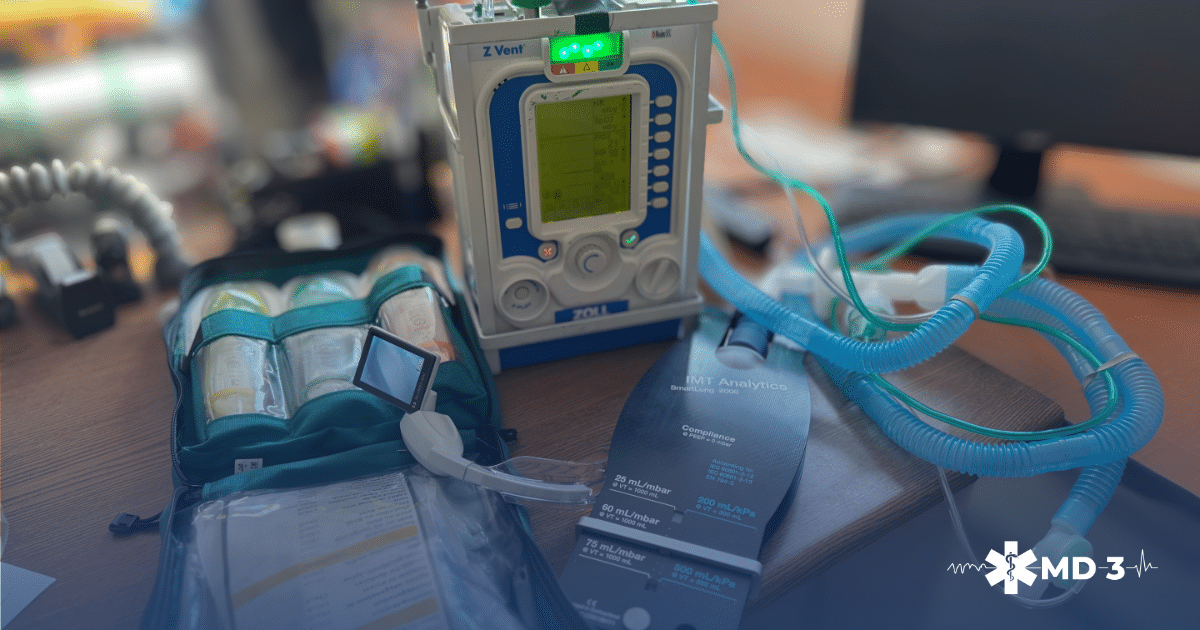
This continuing education course, part of the MD3 Rounds educational blog series, focuses on mastering advanced airway management for Maine’s unique operational landscape, emphasizing the principle that the best airway is the one that ventilates. You will learn to navigate the complexities of long transport times and varied patient conditions by prioritizing effective oxygenation and ventilation over specific tools. The module covers the strategic use of supraglottic airways (SGAs), video laryngoscopy (VL), and manual bag-valve-mask (BVM) techniques in accordance with Maine EMS protocols.

What Will You Learn

  • Explain the rationale behind Maine EMS protocols for advanced airway management, particularly Protocol 7-2 and 7-3.
  • Differentiate between the physiological goals of oxygenation and ventilation and the dangers of hyper- and hypoventilation in the prehospital setting.
  • Justify the use of Supraglottic Airways (SGAs) as a frontline advanced airway strategy, citing relevant evidence from trials like PART and AIRWAYS-2.
  • Describe the benefits and limitations of standard geometry video laryngoscopy (VL) and explain why Maine protocols prohibit hyperangulated blades.
  • Demonstrate knowledge of best practices for manual Bag-Valve-Mask (BVM) ventilation, including the two-person technique and the use of waveform capnography as a feedback tool.
  • Recognize the critical importance of continuous waveform capnography for confirming airway placement, monitoring CPR quality, and ensuring patient safety during transport.
  • Adapt airway management strategies for special populations, including pediatric, trauma, and patients with conditions like asthma/COPD, TBI, or stroke.
  • Identify and apply system-level practices that contribute to airway excellence, such as pre-procedure checklists and quality assurance/improvement (QA/QI) processes.

Course Content

Introduction: The First Decision on a Long Road
Maine's challenging geography and long transport times amplify the difficulty and high stakes of prehospital airway management for paramedics.

  • Course Orientation
  • Course Overview & Objectives
  • Introduction & Physiology
  • Maine EMS Airway Protocols
  • Basic Airway Adjuncts
  • Supraglottic Airways (SGAs)
  • Video Laryngoscopy
  • The Neglected Skill: Manual Ventilation
  • Waveform Capnography
  • Special Populations
  • Advanced Concepts: Pharmacologic Airway Management
  • Case Studies

Conclusion: Holding the Line on What Truly Matters
In the demanding environment of Maine, effective, confirmed, and sustained oxygenation and ventilation is the only true measure of success in airway management, a principle that guides every decision.

Student Ratings & Reviews

No Review Yet
No Review Yet
Go to Top